The fifth overview in this series focuses on Germany—a country that almost abandoned public shelters after the end of the Cold War. Today, it is restoring civil protection, but rather than relying on large central bunkers, it is placing its bet on accessible shelters close to home, work, and public buildings.
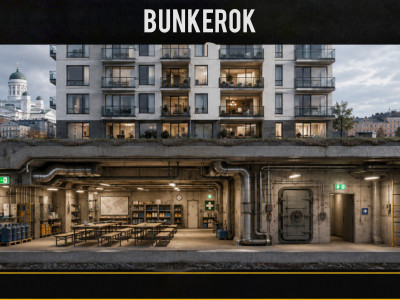
Germany plans to utilize not only old bunkers, but also tested basements, parking garages, and other underground spaces
The shelter situation in Germany is almost the exact opposite of the Swedish or Finnish experience. Those countries preserved their networks of civil shelters for decades. Germany, on the other hand, concluded that a major war in Europe had become highly unlikely and gradually phased out a significant portion of its protective infrastructure.
According to Bundestag data, formally 579 public protective structures remain in the country, but not a single one is functionally and operationally ready. On paper, these facilities are designed for approximately 478,000 people.
For a nation where 83.5 million people lived at the end of 2025, this is more of a remnant of a bygone era than a ready-to-use shelter network. Germany now essentially needs to redefine where people should seek protection during a missile or drone attack.
Why Germany Abandoned Its Shelter Network
After the end of the Cold War, old bunkers came to be viewed as expensive infrastructure with no further practical use. In 2007, the German Federal Government and state governments decided to phase out the public shelter system. Following this, the structures were no longer regularly maintained or kept in operational readiness, and some were decommissioned from civil defense assets.
At that time, the country still counted nearly 2,000 public shelters. Over time, some of these facilities were sold, demolished, or repurposed into housing, offices, cultural spaces, and other uses. Along with their new functions, these buildings often lost their airtight doors, filters, ventilation, and backup power equipment.
In some places, concrete shells remained, but without working emergency exits, ventilation, and life-support systems, they cannot accommodate people as proper shelters. The situation in the capital is telling: there are currently no operational public shelters in Berlin.
The formal capacity figure does not reflect the real state of civil protection, as existing public shelters are not ready for immediate use
Why Old Bunkers Don't Solve the Modern Problem
At first glance, the simplest solution would be to repair surviving bunkers and build new ones. However, modern missile and drone threats differ significantly from the scenarios for which Cold War systems were created.
An attack warning may arrive just a few minutes in advance. Within that window, a person won't have enough time to reach a large bunker on the other side of town. A protective space must be right nearby—in a residential building, at work, in a store, subway, underground parking garage, or public institution.
This short warning time defines Germany's new model. Instead of a few large central bunkers, the state plans to create a network of decentralized rapid-shelter sites. Inspected spaces are to be designated, mapped, and displayed to the public via warning warning systems, particularly the NINA alert app.
However, a key risk arises here. Simply labeling any basement as a shelter will quickly increase the number of addresses on the map, but it won't provide actual protection for people. An underground location may reduce the danger from glass and debris, but without structural integrity checks, exits, and proper ventilation, a basement does not become a functional bunker.
How a Basement Differs from a Fully Equipped Shelter
Germany needs to do more than just identify underground premises—it must clearly explain to the public the capabilities of each option.
Best available space—a windowless basement or an interior room without external windows. It can reduce the risk of injury from flying glass and shrapnel. These are precisely the locations recommended by Germany’s Federal Office of Civil Protection and Disaster Assistance (BBK) in the event of an explosion threat.
Prepared rapid-shelter location—an inspected space with open access, safe exits, emergency lighting, and basic conditions for short-term stays.
Fully equipped protective structure—an engineered facility with a certified protection rating, reinforced structures, ventilation, airtight sealing, emergency exits, and life-support systems.
This classification helps avoid a false sense of security. Citizens must not only know the address of the nearest facility, but also understand what specific threats it can actually protect against.
Germany's New Shelter Concept – Schutzraumkonzept
Germany is developing a nationwide shelter framework—Schutzraumkonzept. It provides for a network of accessible shelter spaces where people live, work, study, or spend a significant part of their day.
As of summer 2026, the core principles of the concept have been established: the foundation of the future system centers on a decentralized approach with a high density of rapid-shelter spots, while the final document is being coordinated with state governments.
The scale of upcoming changes is reflected in the "Civil Protection Pact" approved by the government on May 20, 2026: presented by Interior Minister Alexander Dobrindt, the initiative allocates nearly €10 billion in investments through 2029 for a broad range of measures—from alert systems and rescue service equipment to THW development, backup power and water supplies, and incorporating public shelter guidance into the NINA app.
The general roadmap for creating the new shelter network is already established:
- locate basements, underground parking facilities, subway stations, and other accessible areas;
- conduct structural and engineering inspections;
- determine the actual level of protection;
- eliminate deficiencies that prevent safe utilization;
- mark access routes and upload verified addresses to emergency warning systems;
- designate responsible parties for facility access, maintenance, and technical condition.
The new German model shifts protection closer to the individual—where people spend their daily lives.
The most challenging task is guaranteeing the quality of every pin on the map. An address in the app must mean that the facility is genuinely accessible, has passed inspection, and possesses a safe emergency exit. Otherwise, a digital map will offer little more than an illusion of readiness.
While the new network is taking shape, the BBK recommends that citizens maintain emergency home supplies for up to ten days, though even a three-day supply is a good start. Water, food, essential medication, a flashlight, radio, and power bank will help navigate disruptions to electricity, retail, and utility services. However, emergency stockpiles supplement a protection system rather than replace a proper shelter.
What Protective Solutions Germany Needs Today
The new model generates demand for comprehensive civil defense infrastructure: building inspections, structural reinforcement, blast/fire doors, ventilation, emergency power, direction signage, and routine technical maintenance.
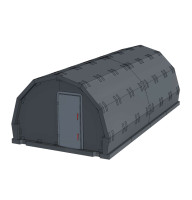
If an underground space exhibits sufficient structural potential, a practical approach is its modernization and reinforcement. Where suitable basements are absent or retrofitting is impractical, options like ARCA modular shelters, mobile protective units, private shelters, or specialized solutions for enterprises and critical infrastructure can be evaluated.
This is not about a single one-size-fits-all bunker. The type of structure must be selected based on actual threats, occupancy numbers, required autonomy time, and specific site conditions.
In this regard, German market needs intersect directly with BUNKER-OK's experience. Ukrainian practice demonstrates how shelter spaces, entryways, ventilation, communications, and emergency power perform not just in drills, but under actual missile and drone strikes. This real-world experience forms the basis of CPS – Civil Protection Standard, BUNKER-OK’s civil protection standard, combining engineering expertise, physical stress testing, ballistics, and field blast trials.
For the German market, Ukrainian expertise does not replace local building codes, planning, or certification. Its value lies elsewhere—in a practical understanding of how protective structures and systems behave under modern wartime strikes.
Germany is establishing a modernized civil defense framework. Its long-term effectiveness will depend less on the sheer count of addresses on a map and more on rigorous inspections, operational equipment, ready access, and ongoing maintenance. A shelter becomes a real safety asset only when it can be unlocked and relied upon the moment danger strikes.
The next overview will focus on the Baltic states—Estonia, Latvia, and Lithuania. We will analyze how proximity to Russia shapes their approach to civil protection, where they are sourcing shelter capacity, and why the Baltic experience matters for all of Europe.
Sources
Deutscher Bundestag: Zielperspektive für öffentliche Schutzräume, 2026
Deutscher Bundestag: Öffentliche Schutzräume in Deutschland, 2025
Deutscher Bundestag: Entwicklung eines nationalen Schutzraumkonzepts
Bundesregierung: Pakt für den Bevölkerungsschutz beschlossen, 2026
BBK: Essen und Trinken bevorraten
Destatis: Bevölkerung Deutschlands Ende 2025
Berlin.de: Fragen und Antworten zum Katastrophenschutz
Useful links
→ BUNKER-OK Shelter Modernization and Reinforcement
→ How the CPS Civil Protection Standard Was Created
→ "Peace is No More": How Sweden Is Rearming with Shelters
→ European Shelter Market Analysis
BUNKEROK is not just a shelter manufacturer.
We define a new norm of safety where protecting life can no longer rely on compromises. BUNKEROK exists to transform the SAFETY of people, businesses, and infrastructure into the NEW STANDARD of the modern world.
We are open to partnerships, collaborations, and co-creating a stronger, safer future.
WEBSITE: bunker-ok.com.ua
INSTAGRAM: @bunkerok_ukraine
YOUTUBE: @bunker-ok
FACEBOOK: bunkerok.ukraine
LINKEDIN: bunkerok
Visit, subscribe, share. Become part of a new culture of safety in Ukraine. Every share is a contribution to knowledge that can save lives. Together, we shape a culture of responsibility, strength, and security for generations to come.
JOIN US. SHARE. BUILD A FUTURE WHERE PROTECTION IS EVERYONE'S CONSCIOUS CHOICE.