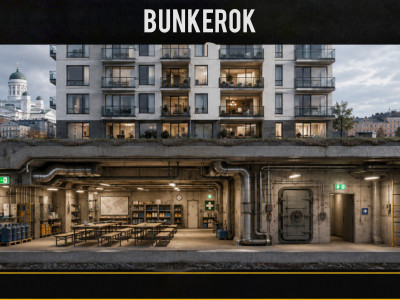
The first overview is dedicated to Sweden. Despite already providing shelters for approximately two-thirds of its population, the country continues to invest in developing its civil defense system, demonstrating that even one of the most advanced models requires continuous improvement.
Overview No. 1. Sweden
“Peace is no more.” How Sweden is rearming with shelters
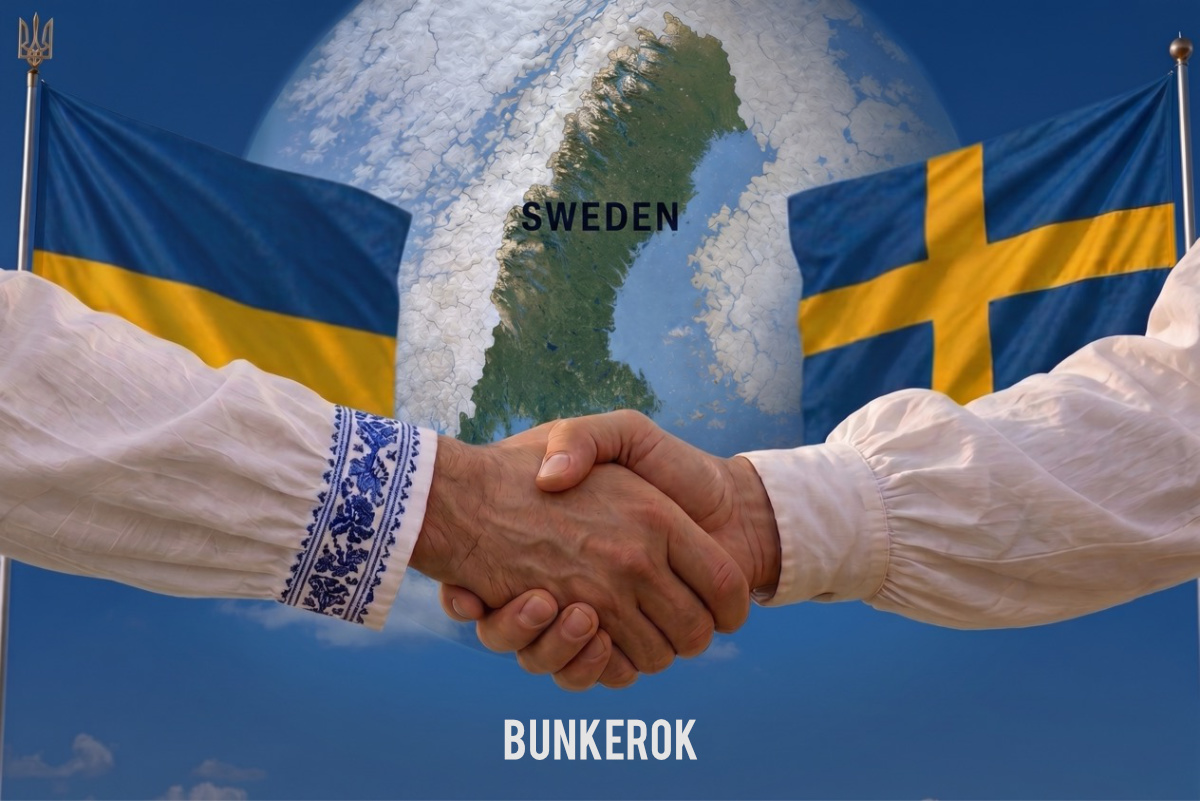
Swedish Prime Minister Ulf Kristersson described Europe’s new reality in a single sentence: “Sweden is not at war. But peace is no more.” For the country, this has become not a political statement, but a principle of state policy. That is why Sweden is not simply preserving its Cold War heritage, but reinterpreting it in accordance with modern threats—investing in modernization, technology, and the long-term readiness of society.
A long-standing tradition of military non-alignment did not prevent Sweden from creating one of the most developed civil defense systems in the world. After 2022, the country revised its security policy, and in 2024 it became NATO's 32nd member.
Ukraine already knows what 21st-century warfare looks like. Europe is only building a defense system against it. That is why Ukrainian experience today is becoming one of the most valuable sources of practical knowledge for shaping a new architecture of civil security.
Sweden: a country that understands—security has become the new infrastructure of life.
Sweden has long been a global benchmark for security, trust in government, and crisis readiness. A country that already has over 64,000 civil shelters and is capable of protecting the majority of its population is not stopping in 2026. It is increasing civil defense funding sevenfold and modernizing one of the world's most advanced shelter systems. Because modern security is the new infrastructure of life.
What the Swedish model means for the market
The key feature of the Swedish model is that the country is not building its civil defense system from scratch. It is systematically modernizing one of the largest networks of protective structures in the world, adapting it to new types of threats. This creates a completely different market: the primary focus shifts from building new bunkers to integrating modern technologies, engineering solutions, and new security standards into existing infrastructure.
At the same time, modernization does not address all of the country's needs. Small municipalities, new residential areas, and social infrastructure facilities that historically lacked their own shelters require turn-key modular solutions for schools, hospitals, nursing homes, and other public facilities. A distinct segment is formed by the private sector and critical infrastructure operators—energy, telecommunications, transport, water supply, and industry—for whom operational continuity is an element of national security.
Where do Swedish demand and Ukrainian experience intersect?
It is precisely at the intersection of modernizing existing shelters and constructing new ones that a space emerges where Ukrainian experience in real combat testing holds practical value for the Swedish market.
All BUNKEROK products are developed according to the company's proprietary standard—CPS (Civil Protection Standard), the first quality standard based on real proving ground tests, including against warheads of Shahed-type UAVs, rather than relying solely on theoretical models. This is a fundamental distinction of Ukrainian solutions: they have been tested against the exact threat they are designed to protect against.
BUNKEROK is ready to operate across four key directions:
- ARCA modular above-ground shelters—for schools, hospitals, municipal, and other social facilities lacking underground protection.
- Next-generation mobile reinforced concrete shelters—rapid solutions delivered to the site fully or partially assembled and installed within a few hours without prolonged construction or additional landscaping works. Deployed near private homes, industrial facilities, manufacturing sites, warehouses, critical infrastructure objects, logistics hubs, construction sites, and public gathering places. In today's context, a mobile shelter becomes as essential an infrastructure element as a generator, communication system, or backup power supply.
- Protective solutions for critical infrastructure—energy, telecommunications, transport, industry, and control centers where operational continuity is an element of national security.
- Engineering consulting for the modernization of existing protective structures—structural assessment, recommendations for reinforcement, and the integration of modern protective technologies based on experience gained during full-scale warfare.
For the Swedish market, this means one thing: the ability to provide people with protection in days or hours instead of months of construction—and to do so according to a standard proven by real warfare.
The next overview in the series—Finland. A country that spent decades developing one of the most extensive civil defense systems in Europe and today combines that experience with new security challenges.
BUNKEROK is not just a shelter manufacturer.
We define a new norm of safety where protecting life can no longer rely on compromises. BUNKEROK exists to transform the SAFETY of people, businesses, and infrastructure into the NEW STANDARD of the modern world.
We are open to partnerships, collaborations, and co-creating a stronger, safer future.
WEBSITE: bunker-ok.com.ua
INSTAGRAM: @bunkerok_ukraine
YOUTUBE: @bunker-ok
FACEBOOK: bunkerok.ukraine
LINKEDIN: bunkerok
Visit, subscribe, share. Become part of a new culture of safety in Ukraine. Every share is a contribution to knowledge that can save lives. Together, we shape a culture of responsibility, strength, and security for generations to come.
JOIN US. SHARE. BUILD A FUTURE WHERE PROTECTION IS EVERYONE'S CONSCIOUS CHOICE.