What is blast load reduction coating?
Blast load reduction coatings are specialized materials used to protect buildings and structures from the destructive effects of explosions. They absorb and dissipate the energy of a blast wave, reducing the damage it can cause to structures. These coatings are important for protective shelters, such as bunkers and missile shelters, as they increase the safety and stability of structures.
How blast load reduction coatings work
Blast load reduction coatings work on the principle of absorbing and dissipating the energy of an explosion. They consist of multi-layered materials that have high strength and elasticity. When struck by a blast wave, these materials deform, absorbing some of the energy and reducing its impact on the main structure.
The main materials used for such coatings are special polymers, reinforced composite materials and metals. They are highly resistant to mechanical damage and can withstand high loads.
Advantages of blast load reduction coatings
- Protection from destruction: Coatings significantly reduce the destructive effect of a blast wave on a structure, preventing its damage or complete destruction.
- Increased safety: The use of such coatings increases the level of safety for people inside the shelter, reducing the risk of injury or death.
- Reduced repair costs: After an explosion, a structure with a blast load reduction coating usually requires less repair, which reduces overall restoration costs.
- Durability: Modern materials have high wear resistance, which ensures a long service life of the coatings.
Application of blast load reduction coatings in protective shelters
Military bunkers
Military bunkers, which are used to protect personnel and equipment, are often equipped with blast-reducing coatings. This reduces damage from artillery explosions, rocket strikes, and other explosive threats. The coatings provide an additional layer of protection, reducing the risk of debris and other dangerous fragments entering the bunker.
Civil shelters
Civil defense shelters, which are used during emergencies, may also be equipped with such coatings. This provides protection for the population from explosions and their consequences, including debris and heat waves. The use of blast mitigation coatings in civilian shelters increases their effectiveness and reliability.
Industrial facilities
In industrial facilities where there is a risk of explosions (for example, chemical plants or oil refineries), blast mitigation coatings can be used to protect critical structures. This reduces risks to workers and prevents serious accidents.
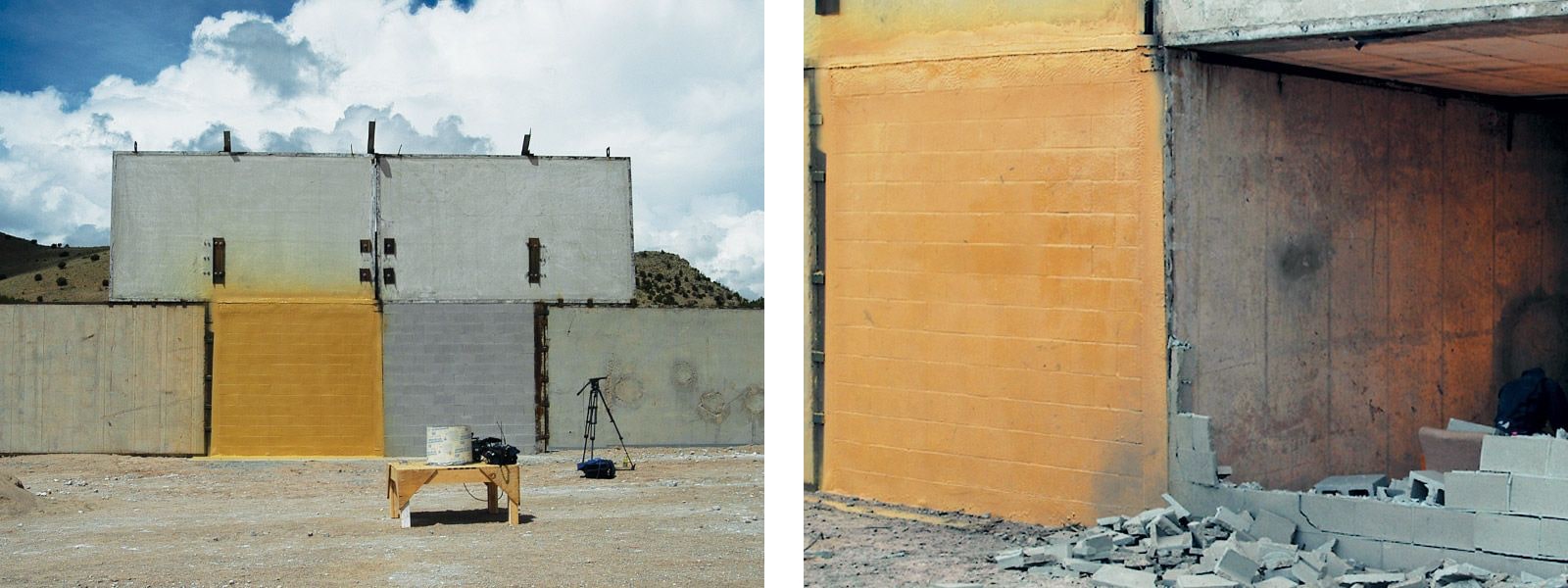
Innovations in blast mitigation coatings
In recent years, blast mitigation coating technologies have improved significantly. The use of nanomaterials, new composite materials and innovative polymers allows the creation of coatings with improved characteristics. For example, carbon nanotube nanocomposites have exceptional strength and ability to absorb explosion energy.
Another important innovation is adaptive coatings that can change their properties depending on operating conditions. Such coatings are able to automatically respond to the impact of a blast wave, providing maximum protection in critical situations.
Choosing coatings to reduce blast loads
When choosing a coating to reduce blast loads, it is important to consider several key factors:
- Type of threat: Different coatings can be optimized to protect against different types of explosions. For example, protection against missile strikes may require different materials than protection against industrial explosions.
- Shelter design: The coating must be compatible with the materials and structure of the shelter to ensure maximum effectiveness.
- Operating conditions: Consideration of climatic conditions, humidity, temperature fluctuations and other operational factors will help select the most suitable coating.
- Cost and durability: The optimal coating should be cost-effective and provide long-term protection without the need for frequent repair or replacement.
Conclusion
Blast-reducing coatings are an important component of protective shelters, such as bunkers and missile shelters. They provide an additional level of safety, protecting structures from the destructive effects of explosions. The use of modern materials and technologies allows you to create effective and durable coatings, which increases the level of protection and safety for people and objects.
For additional information and advice on the selection and application of blast-reducing coatings, contact specialists in this field, for example, the BUNKEROK company. You can also order and buy a bunker and protective shelter for domestic or professional needs from us.